kilkennybookcentre.com – Zachary Taylor, the 12th President of the United States, is often remembered more for his military career than his brief and tumultuous time in office. His leadership, both as a soldier and a president, was unconventional in many ways. A man of few words and simple actions, Taylor eschewed traditional political maneuvering, focusing instead on his instincts and sense of duty. His unorthodox approach to leadership not only earned him the respect of his soldiers but also made a lasting impact on his presidency, despite its short duration.
This article will explore the unconventional leadership of Zachary Taylor, focusing on his military career, his rise to the presidency, and the unique leadership style he exhibited during his time in office.
From Soldier to President: A Reluctant Leader
A Career in the Military
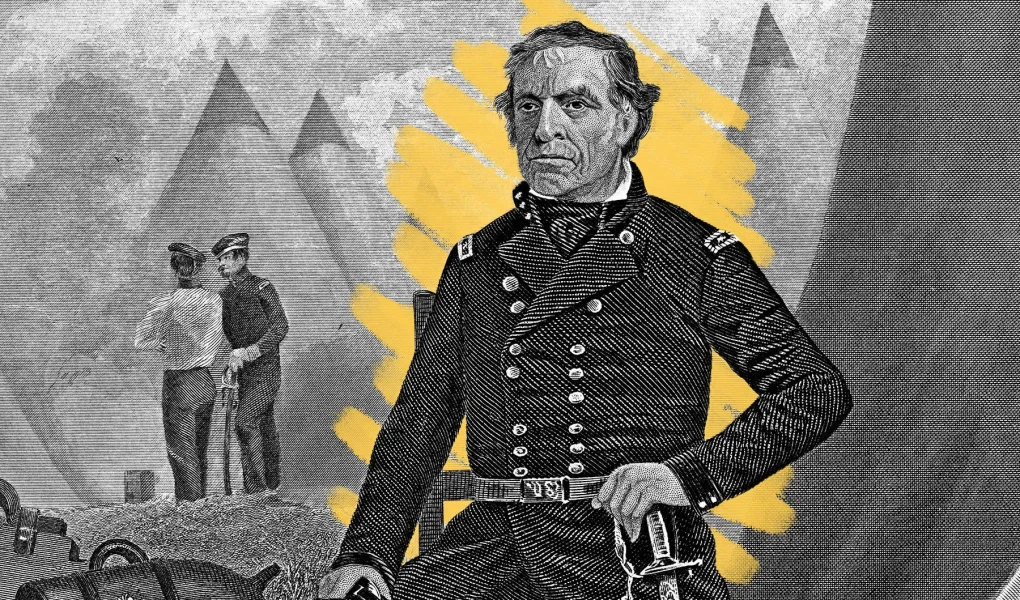
Zachary Taylor’s path to the presidency was a far cry from that of most of his political counterparts. While many U.S. presidents had extensive political backgrounds, Taylor was first and foremost a soldier. He spent over 40 years in the U.S. Army, having enlisted in 1808 at the age of 24. Throughout his military career, Taylor served in various locations, including frontier posts in the Midwest, the South, and the borderlands of the United States. His early experiences were marked by skirmishes with Native American tribes, but his military reputation would grow in the face of larger challenges.
Taylor’s most significant contributions came during the Mexican-American War (1846-1848), where he earned the nickname “Old Rough and Ready” for his no-nonsense, pragmatic approach to warfare. Taylor’s reputation as a fearless leader, who often led his men into battle with the same tenacity and bravery they showed, earned him widespread acclaim. He won several key battles during the war, including the Battle of Palo Alto, the Battle of Resaca de la Palma, and the Battle of Buena Vista. His military success made him a household name and a hero, but it also set him apart from other politicians, who viewed military service as a stepping stone to political power.
Despite his success on the battlefield, Taylor was never overly ambitious in his political aspirations. When approached to run for president, Taylor expressed reluctance, citing his lack of political experience and interest in public office. However, as his popularity grew, particularly in the wake of his victories in Mexico, political parties saw the value in nominating him as a presidential candidate. Ultimately, the Whig Party, looking for a candidate who could unite the nation, nominated Taylor for the presidency in 1848. Though he had little desire to lead the country, Taylor’s unconventional political journey began, making him one of the few presidents with little to no political background before taking office.
The Reluctant Candidate
Zachary Taylor’s presidential candidacy was one of the most unconventional in American history. The Whig Party, despite being divided over the issue of slavery, chose Taylor because he was seen as a man who could transcend party politics. He had no strong partisan allegiance and was largely seen as an outsider in Washington. This played to his advantage, as voters, weary of political infighting, saw in Taylor a candidate who could rise above the usual political wrangling.
His military background and popularity as a national hero made him an appealing figure, but his reluctance to engage with party politics, or even make clear promises about his policies, set him apart from other candidates. His slogan, “The Hero of Buena Vista,” emphasized his military accomplishments over any political stance. Taylor’s campaign was largely based on the public’s admiration for his leadership in the Mexican-American War rather than any clear-cut political vision.
This non-traditional approach to campaigning was both a strength and a weakness. On the one hand, it appealed to a public disillusioned with the political establishment. On the other hand, it left many wondering what Taylor’s presidency would actually look like. How would a man with no political experience handle the complex issues facing the nation, particularly the increasingly divisive issue of slavery?
The Presidency of Zachary Taylor: A Leadership Style Like No Other
A Man of Few Words
Once elected, Zachary Taylor took office on March 4, 1849, with little fanfare and no clear political agenda. His leadership style as president was shaped by his military background and his personal disposition. Taylor was a man of few words and preferred to lead through action rather than rhetoric. He rarely gave speeches or made public statements, a stark contrast to the more verbal and charismatic leaders of his time. This reserved nature was often seen as a flaw by some, who criticized his lack of communication and unwillingness to engage in political discourse. Yet, it was precisely this quality that allowed him to remain above the political fray and avoid being ensnared in partisan battles.
Taylor’s preference for action over talk was evident in his decision-making as president. He was not one for complex political negotiations or deals. Instead, he relied on his instincts and simple logic. This approach was evident in how he handled the issue of slavery in the territories acquired after the Mexican-American War. Taylor’s stance on the expansion of slavery was pragmatic but also bold. He supported admitting California and New Mexico as free states, rejecting the idea of extending the Missouri Compromise line to the Pacific. Taylor’s position was at odds with many Southern leaders, who saw the expansion of slavery as essential to their economic interests. However, Taylor refused to compromise, emphasizing his belief that the people in these new territories should decide the issue for themselves.
Refusal to Be Tied to Party Politics
One of the most unconventional aspects of Taylor’s presidency was his complete disregard for party politics. While most presidents aligned closely with their political parties, Taylor remained somewhat aloof from the political maneuvering that defined his time in office. He was elected as a member of the Whig Party, but he was never particularly loyal to its ideologies or its leaders. Taylor was a man more interested in governing the country than in playing party politics, and this often put him at odds with his party’s leaders.
Taylor’s refusal to cater to party interests extended to his appointments. Instead of appointing loyal Whigs to key positions, he favored individuals based on merit and personal judgment. This approach angered many Whigs, who expected the president to reward political loyalty with patronage. Taylor’s indifference to political favors earned him the ire of party elites but endeared him to ordinary Americans, who saw him as a leader who wasn’t beholden to any special interests.
In many ways, Taylor’s leadership was a precursor to the anti-establishment sentiments that would characterize later political movements. His refusal to be constrained by party lines and his focus on national unity rather than sectionalism appealed to many who were weary of the entrenched political elites of the time.
Handling the Slavery Crisis
The issue of slavery was one of the most divisive and pressing issues of Taylor’s presidency. As the nation expanded westward, the question of whether new states would permit slavery loomed large. The balance between free and slave states was fragile, and Taylor found himself in the midst of a storm over how to handle the issue of slavery in the newly acquired territories from the Mexican-American War.
Taylor’s approach to this issue was again unconventional. Rather than following the typical political route of compromise, he pushed for California and New Mexico to enter the Union as free states. He advocated for the idea of popular sovereignty, which allowed settlers in these territories to decide for themselves whether to allow slavery once they formed their own state governments. Taylor’s refusal to entertain compromises, such as the extension of the Missouri Compromise line, was a bold stance, but it also alienated many Southern leaders who saw it as a direct threat to their interests.
Despite his firmness, Taylor did not live long enough to see the resolution of the crisis. In July 1850, he died suddenly of a stomach illness, just over a year into his presidency. His death left the country in a state of uncertainty, and Vice President Millard Fillmore assumed the presidency, eventually overseeing the passage of the Compromise of 1850. Taylor’s death, however, did not erase the legacy of his leadership during a time of national crisis.
Legacy of Zachary Taylor’s Leadership
Zachary Taylor’s presidency was marked by his unconventional approach to leadership, which was deeply influenced by his military experience. His decision to remain above party politics, his willingness to stand firm on issues like slavery, and his reluctance to engage in the political gamesmanship of the time left a lasting impression on American political culture.
Taylor’s leadership also highlighted the potential for outsiders to rise to power, unencumbered by the typical political alliances and obligations that often shape presidential decisions. In an era where many presidents were shaped by their party affiliations, Taylor stood out for his independence and dedication to what he believed was best for the country, rather than what was best for his political career.
Though his presidency was cut short by his sudden death, the story of Zachary Taylor’s unconventional leadership serves as a reminder of the power of integrity, decisiveness, and the importance of leading by example. His legacy endures not only as a military hero but also as a leader who, in his brief time in office, managed to challenge the norms of his era and leave a mark on American history that transcended his brief time in the White House.
Conclusion
Zachary Taylor’s leadership, both as a military officer and a president, was marked by a deep commitment to duty and a reluctance to engage in the typical political machinations of his time. His unwillingness to conform to party lines, his focus on practical solutions, and his emphasis on national unity set him apart from other leaders of his era. Though his presidency was brief, his unconventional leadership style had a lasting impact on the nation, demonstrating that a president’s success does not always rely on political maneuvering but rather on clear-eyed decision-making and a sense of honor and duty.